
Businesses implementing conversational AI see dramatic shifts in operational efficiency. These AI-powered assistants, with properly designed conversational workflows, handle up to 80% of routine inquiries without human intervention.
Whether you're looking to streamline HR processes, qualify sales leads, or provide 24/7 customer support, modern no-code platforms like Typebot make it possible to create sophisticated experiences that go far beyond basic bots.
The difference between a forgettable chatbot and one that transforms your business lies in strategic implementation: focusing on solving real user problems through guided, contextual conversations.
In this guide, we'll explore proven chatbot use cases across industries, with practical examples you can implement today.
Customer Service and Support Use Cases
A customer anxious about their package at 2 AM used to rely on a hopeful email and a long wait. Now, they connect instantly with a smart chatbot that locates their order in seconds.
This is the power of chatbots as capable first responders. They don't just reroute queries — they actively solve issues.
1. 24/7 Automated Customer Support Systems
Providing nonstop human support costs a lot. A single full-time, round-the-clock support agent carries significant yearly expenses. Adding a whole team increases costs rapidly.
Chatbots change this. They act as powerful self-service solutions that can:
- Tap into customer databases and check subscriptions
- Fix common technical issues and handle ticket deflection
- Process refunds and resolve problems autonomously
The key is dynamic conversation design. Effective support bots avoid rigid pathways by using conditional logic to tailor interactions. Customers with past billing problems get a different experience than newcomers with simple questions.
Data shows an interesting trend: for simple tasks like password resets or order tracking, customers often prefer chatbot support. Instant answers beat traditional "personal touch" for routine issues — especially among younger demographics.
Typebot is excellent for FAQ automation, structured troubleshooting, and building AI chatbots with custom knowledge bases. For live chat or human-in-the-loop (HITL) scenarios, dedicated tools like Intercom, Zendesk, or Freshdesk may be a better fit.
2. FAQ Automation and Knowledge Base Integration
Classic FAQ pages often fail users. Readers skim long texts, search in frustration, then contact support anyway. Knowledge base chatbots change this experience.
Natural language processing takes this further. When connected to AI models like OpenAI or Anthropic, chatbots handle diverse question phrasings. Whether a user says "Where's my stuff?" or "Track my order," the chatbot directs them correctly every time.
Smart FAQ automation targets the few questions that eat up most support time. Typebot identifies high-traffic queries and spots where users get stuck — providing valuable insights to refine help content and improve products.
Check our guide on FAQ chatbots for deeper strategies.
3. Multi-Channel Support Across Platforms
Customers use many platforms: WhatsApp, Twitter, email, web chat — often for the same issue. Older systems kept these interactions separate, causing frustration.
Modern chatbot platforms eliminate these barriers. A chat started on your website continues seamlessly on WhatsApp, carrying all context and past messages. No repetition needed.
Typebot's WhatsApp integration lets website users scan a QR code to continue chatting on their phone without losing context — vital for global or mobile-first audiences.
Deployment is simple with Typebot's webhook system. Conversations stay synchronized across channels with reliable user identification by email, phone, or custom IDs. The result: an uninterrupted support thread focused on the customer, not the platform.
Businesses offering unified multi-channel support report higher customer lifetime value. When customers can reach you their way — and know you remember them — they tend to become loyal.
Typebot handles WhatsApp and website flows well. For unified dashboards across multiple agents, specialized platforms like Zendesk or LiveChat may be a better fit.
Lead Generation and Sales Automation Use Cases
A potential customer visiting your website at night used to fill out a generic form and wait for a callback during business hours. Now, Typebot's chatbot engages them instantly in a conversational manner. at night used to fill out a generic form and wait for a callback during business hours. Now, Typebot’s chatbot engages them instantly in a conversational manner.
Typebot’s scoring features rate responses and direct high-value prospects to sales teams immediately. Others enter nurturing email campaigns. Mentions of “enterprise deployment” or urgent timelines prompt immediate sales attention.
Those exploring “free trials” get tailored follow-ups, all supported by smart automation through lead qualification tools.
Interactive conversations have transformed how businesses attract and nurture leads. Instead of rigid questionnaires, today’s chatbots create personalized paths for each prospect. They turn qualification into a helpful dialog rather than an interrogation.
Typebot works particularly well here thanks to conversational forms, conditional logic, and native scheduling integrations.
For businesses needing advanced CRM automation or outbound engagement, pairing Typebot with a dedicated sales engagement platform like HubSpot Sales, Salesloft, or Outreach is ideal.
Check the complete guide on lead generation chatbots here.
4. Qualifying Prospects with Conversational Forms
Traditional lead forms treat every visitor the same and ignore their unique needs. Conversational chatbots tailor the process from the start.
For example, a marketing agency using Typebot’s conditional logic asks personalized questions. If a visitor asks about SEO, the chatbot explores their current rankings and goals.
If the topic is paid advertising, the conversation shifts to budget and campaign objectives. One entry point opens dozens of pathways.
This approach builds rapport naturally. Instead of leading with budget questions—which can deter prospects—a Typebot flow begins with project scope.
Typebot’s scoring features rate responses and direct high-value prospects to sales teams immediately. Others enter nurturing email campaigns. Mentions of “enterprise deployment” or urgent timelines prompt immediate sales attention. Those exploring “free trials” get tailored follow-ups.
5. Automated Appointment Scheduling and Booking Systems
Booking appointments across time zones using emails wastes hours. Typebot's Cal.com integration streamlines scheduling, letting users book appointments within the conversation. emails wastes hours. Typebot’s Cal.com integration streamlines scheduling, letting users book appointments within the conversation.
A dental practice example shows how Typebot checks a patient’s last cleaning date from integrated records. It suggests ideal timing and automatically assigns longer slots for new clients. Routine visits fit smoothly into standard schedules without hassle.
These scheduling bots do more than match calendar slots. A law firm’s Typebot asks about urgency, offering same-day openings for time-sensitive cases and scheduling routine matters later. This triage enhances the user experience.
CRM integrations capture contact preferences, concerns, and communication styles during booking. By the appointment, service providers already understand the client’s needs.
Internal Chatbots Examples
6. HR Chatbots for Employee Onboarding & Internal Processes
Starting a new job usually involves paperwork and confusion. These challenges multiply with new policies and leave requests HR teams manage.
HR chatbots simplify onboarding and employee support through intelligent process automation. They create personalized checklists, guide document submissions and send reminders for compliance steps. This eliminates guesswork and speeds up approval processes.
Beyond orientation, chatbots answer leave inquiries or benefits questions anytime. They provide clear responses, check eligibility, explain next steps, and can even start request procedures automatically.
Routine questions drop significantly, and employee satisfaction improves. Thanks to a multilingual chatbot that remembers past conversations and handles repeat queries without losing patience. Learn more in our guide on HR chatbot use cases.
Industry-Specific Chatbot Use Cases for Businesses
Imagine it's late at night and your apartment search feels urgent. You walk into a closed real estate office, but your phone lights up with a message: "Hi! You're looking for a 2-bedroom near downtown? I found seven options. Want to see them?"
This is how industry-focused chatbots understand the unique needs of each field. Whether in real estate, hospitality, or ecommerce, they transform common challenges into opportunities.
7. Real Estate Chatbots for Property Search & Client Management
Real estate agents spend much of their time on repetitive tasks — answering standard questions, organizing showings, sorting through leads. Real estate chatbots reduce this workload by identifying serious buyers versus casual browsers, even at odd hours.
Instead of rigid search tools, these chatbots engage in natural dialogue. They ask about preferences like school districts or outdoor spaces, then recommend listings with virtual tours and neighborhood details.
Key benefits for real estate:
- Qualify leads by assessing budget, urgency, and must-have features
- Send premium prospects straight to agents for immediate follow-up
- Keep casual browsers engaged with new listings and market updates
For a deeper look, explore our guide on chatbots for real estate agents.
8. Hotel & Hospitality Chatbots for Guest Services
Guest experience defines hospitality. Chatbots extend service beyond staff availability, greeting guests with a virtual concierge that helps anytime — even during delayed flights or busy hotel hours.
Hotel chatbots handle everything from pre-arrival requests (adding cribs) to urgent needs (extra towels). They also personalize recommendations — suggesting restaurants or upgrades when rooms are available.
What hotel chatbots can do:
- Enable self-check-in and booking modifications
- Handle maintenance requests instantly
- Increase direct reservations through conversational booking
- Speed up check-in, eliminating lobby wait times
Discover more in our guide on AI chatbots for hotels.
9. Ecommerce Chatbots for Product Recommendations and Orders
Online shopping brings convenience — but also abandoned carts, endless searching, and moments needing quick answers. Ecommerce chatbots make shopping personal and efficient.
They ask friendly questions: shopping for yourself or a gift? What size? Color preferences? This guides shoppers to fitting products instantly.
Beyond product discovery, chatbots help with:
- Order changes and returns
- Package tracking and status updates
- Loyalty programs and automatic discount application
- Suggesting complementary items based on browsing patterns
Businesses see higher conversion rates, fewer abandoned carts, and improved retention as chatbots proactively assist — solving problems before shoppers even ask.
Marketing and Engagement Chatbot Applications
Scrolling through Instagram and receiving a personalized message from your favorite brand can feel refreshing. Instead of a bland "Hello," you get an engaging style quiz. In a few minutes, you discover products tailored to you, share your email willingly, and even enjoy a clever joke.
This is marketing with chatbots at its best: personalized, interactive, and memorable.
10. Survey and Feedback Collection Automation
Traditional surveys feel tedious — and completion rates show it. Conversational surveys in chatbots change the game. Feedback completion surged to 67% when brands switched to chat-based collection, capturing thoughts while the experience was still fresh.
Why conversational surveys work:
- Timing is everything — collect feedback right after a purchase, support chat, or event
- Questions adapt to responses — unhappy users get support, happy users get prompted for testimonials
- Data flows into spreadsheets or CRMs without manual handling
Typebot's conditional logic makes surveys smarter by branching conversations based on sentiment analysis. Learn more in our articles on chatbot survey questions and feedback chatbots.
11. Interactive Quizzes and Lead Magnets
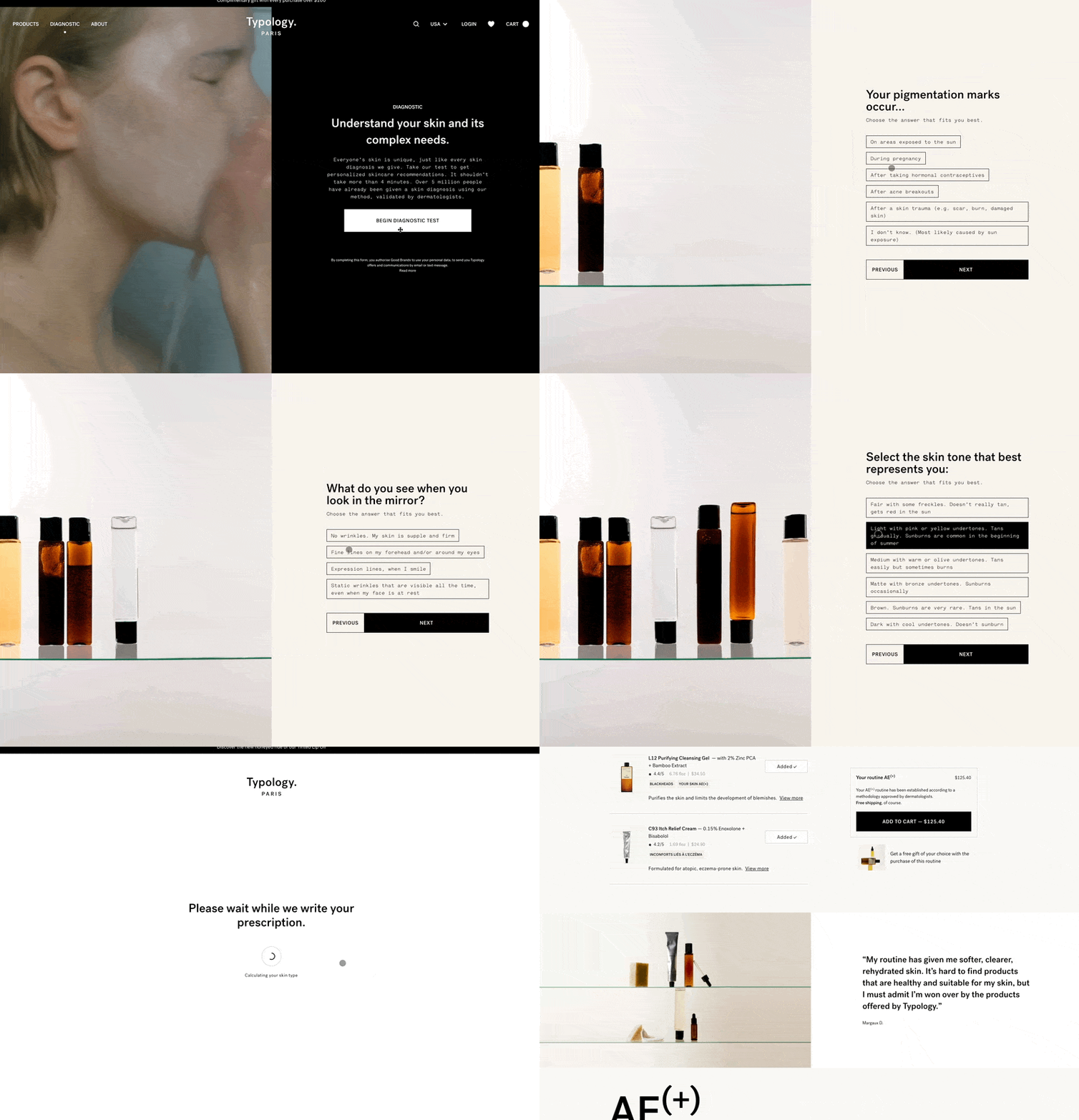
People are tired of generic "Download our free ebook!" pop-ups. Interactive quizzes combine education, entertainment, and engagement — making them powerful lead magnets.
Why quizzes work so well:
- They collect more than contacts — they reveal preferences and buying triggers
- Real-time scoring provides instant personalization
- Mix input types (images, sliders, voice) for distinctive experiences
A home decor brand, for example, discovered minimalist design styles were highly popular through quiz data — guiding important product decisions.
Want to see more creative approaches? Check out these lead generation form examples that go beyond traditional signup forms.
12. Marketing Automation Chatbots
For businesses aiming to scale campaigns and conversions, marketing automation chatbots are indispensable.
These AI-powered bots handle lead qualification, appointment booking, sending quotes, and running loyalty programs. They automate the entire customer journey while syncing seamlessly with your marketing stack.
Want to see how marketers leverage chatbots for automated lead nurturing, onboarding, and campaign triggers? Read our complete guide to marketing automation chatbots.
Measuring Success and Optimizing Chatbot Performance
Chatbot metrics reveal how your automated conversations impact your business. The right metrics can turn a basic chatbot into one that genuinely improves your operations.
Key Metrics for Chatbot Effectiveness
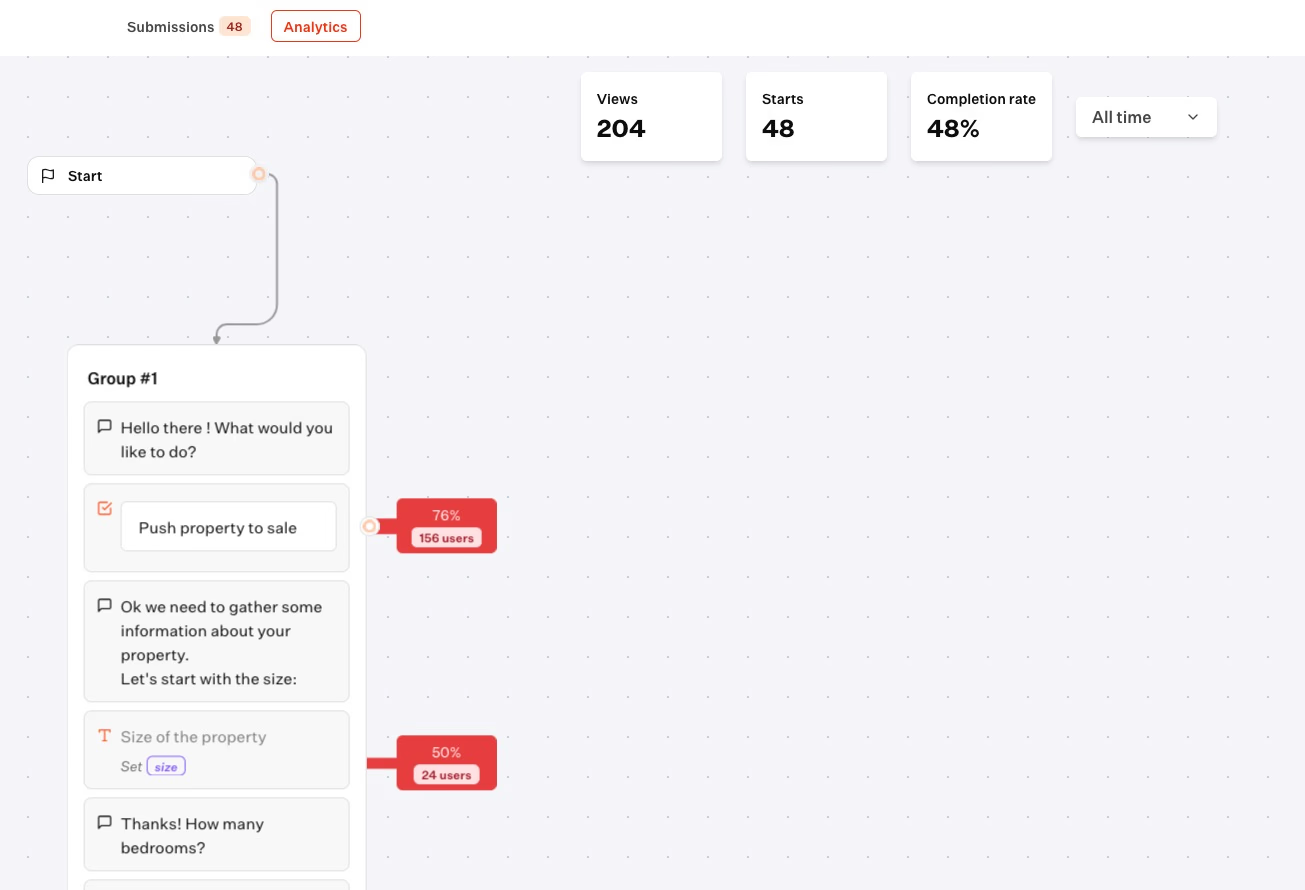
Don't just track chat volume. Measure what matters.
| Metric | What It Measures | Why It Matters |
|---|---|---|
| Task completion rate | Are users achieving their goal? | Track confirmed bookings, not just clicks. If your bot schedules appointments, measure actual bookings. |
| Response accuracy | Are AI answers correct? | Watch for users requesting human help. A real estate agency discovered location-specific gaps by reviewing negative feedback. |
| CSAT score | Are users satisfied? | Context matters. Password-reset bots should score high on speed. Sales bots should be judged by lead quality. |
| Conversion impact | Does the bot drive business value? | Compare chatbot users vs. non-users over weeks. Repeat purchases and loyalty often improve long after the first chat. |
A/B Testing Conversational Flows
Use Typebot's AB Test block to experiment with dialogue structure, not just design. Focus on targeted areas for maximum impact.
Test your entry points. Compare proactive greetings vs. waiting for users to initiate. SaaS firms boosted engagement by adding personalized greetings based on the visitor's page.
Reorder your questions. Some users share more details once they see value. A recruitment chatbot increased resume submissions by moving the upload prompt earlier in the flow.
Adjust your language. Technical users prefer straightforward language. Consumers respond better to friendly tones. Test variations in tone, word choice, and even emoji use.
Try different input styles. Buttons offer quick choices. Open text fields capture richer feedback. Frustrated customers often explain more in text boxes than with predefined ratings.
Continuous Improvement Strategies
Optimization never stops. Treat your chatbot as an evolving asset. Here are practical ways to keep improving:
- Review conversations regularly. Skimming transcripts reveals confusion and missed opportunities. One HR team fixed benefit-query issues after spotting them in chat logs.
- Watch where users drop off. Analytics show abandonment points. If many leave at a specific step, fix it — sometimes rewording is enough, sometimes you need to redesign the flow.
- Update seasonally. Suggest different products for winter vs. summer. Emphasize features during fiscal deadlines. Use conditional logic to adapt to shifting needs.
- Use integration feedback. Data sent to Google Sheets or CRMs reveals which leads convert and which appointment types have higher no-show rates. Let that insight guide your next iteration.
- Learn from failures. Abandoned chats and requests for human support show where to improve. Applying data-driven changes can raise satisfaction from 70% to 85% or higher.
Unleash the Power of Conversational Experiences
Implementing the right chatbot use cases transforms how businesses engage with customers, streamline operations, and drive growth.
Whether you're an HR department automating performance reviews, a marketing team capturing qualified leads, or a customer service team handling support requests — Typebot offers the flexibility to create conversations that matter.